


August is a month of long summer holidays for both schoolchildren and parliamentarians. However, it did not feel like politics took much of a break, with the new Prime Minister, Andy Burnham, keeping up a high profile with a string of announcements. Meanwhile, the leader of Reform UK, Nigel Farage, defeated Count Binface in the parliamentary by-election for Clacton.
So where are we in polling terms as we head back to school (or the House of Commons) into an autumn of party conferences, the budget and the unveiling of the Prime Minister’s ten-year plan for the UK? Is talk of an early general election justified by any changes seen in the polls?
Let’s delve into the August polling figures.
August UK General Election Polling Averages
The average (mean) vote shares from the most recent August poll by each of the eleven polling companies who published a UK general election poll conducted during August, is as follows:
Labour 26.3% (+1.4*)
Reform UK: 24.3% (nc)
Conservatives: 20.1% (+0.3)
Greens: 10.5% (-0.8)
Liberal Democrats: 10.0% (-1.0)
Others: 8.8% (+0.1)
* Compared with July’s average - each month a different combination of pollsters will publish polls, so this change is not strictly comparing like with like but gives a general sense of change.
August’s polling average was compiled using data from the following pollsters – BMG; Deltapoll; Find Out Now; Freshwater Strategy; Ipsos; JL Partners; More In Common; Opinium; Survation; Trajectory Partnership; YouGov.
What do these results mean?
In last month’s polling average, we saw Labour take the lead for the first time since March 2025. This month, we see Labour stretch their lead over Reform UK to two points (see details above). Indeed, Labour’s vote share (26.3%) is their highest since we started collating these monthly polling data in February 2025.
This month also sees the Conservatives’ vote share (20.1%) above 20%, for the first time since April 2025.
Given that both Labour and the Conservatives are at their highest point for over a year, it is unsurprising that the combined Labour and Conservative vote share (46.4%) is at its highest since March 2025. However, this figure is still well below the equivalent figure recorded at the 2024 general election (57.4%), which itself was a record low.
Indeed, we still have a political landscape where five UK-wide parties are in double digits in the polls. Though it is only fair to point out that this is only just the case this month, with the Liberal Democrats suffering a one-point fall for the second month in a row, with their support now standing at 10.0%, their lowest level of support since we started collating these polling averages.
The Greens, standing at 10.5% this month, have also seen their support drop and this is their lowest share since September 2025, when it stood at 9.3%, the last time their support was in single figures.
There has been much talk in recent months about ‘bloc politics’, with the idea that voters are more likely to move between parties in the same bloc, rather than between blocs. The blocs in question being a liberal-left bloc comprising of Labour, the Liberal Democrats and the Greens and a populist-right bloc comprising of Reform UK, the Conservatives and perhaps Restore Britain.
With this in mind, it is worth comparing the vote shares of the liberal-left bloc parties in March 2026, which saw Labour’s polling nadir under Keir Starmer, with their vote shares this month.
Labour is up 7.5 points since March 2026, when their support stood at just 18.8%. There is a strong correlation between the rise in support for Labour since March 2026 and the combined fall in support for the other two parties in the liberal-left bloc, who are down by a combined 7.4 points between them.
The Greens are down 5.3 points compared to March 2026, when they were at 15.8%, while the Lib Dems are down 2.1 points.
It appears that Andy Burnham’s arrival as Prime Minister has enabled Labour to claw back some support from their liberal-left bloc rivals, ensuring once again that they are clearly the best-supported party within the bloc.
The situation within the populist-right bloc is much more finely balanced, with Reform UK at their lowest level of support since spring 2025 and the Conservatives at their highest, but with Reform still leading the Tories by about 4 points.
Put simply, at present there is only one realistic candidate for Prime Minister in the liberal-left bloc, Andy Burnham, whereas in the populist-right bloc, both Nigel Farage and Kemi Badenoch will undoubtedly see themselves as a PM-in-waiting.
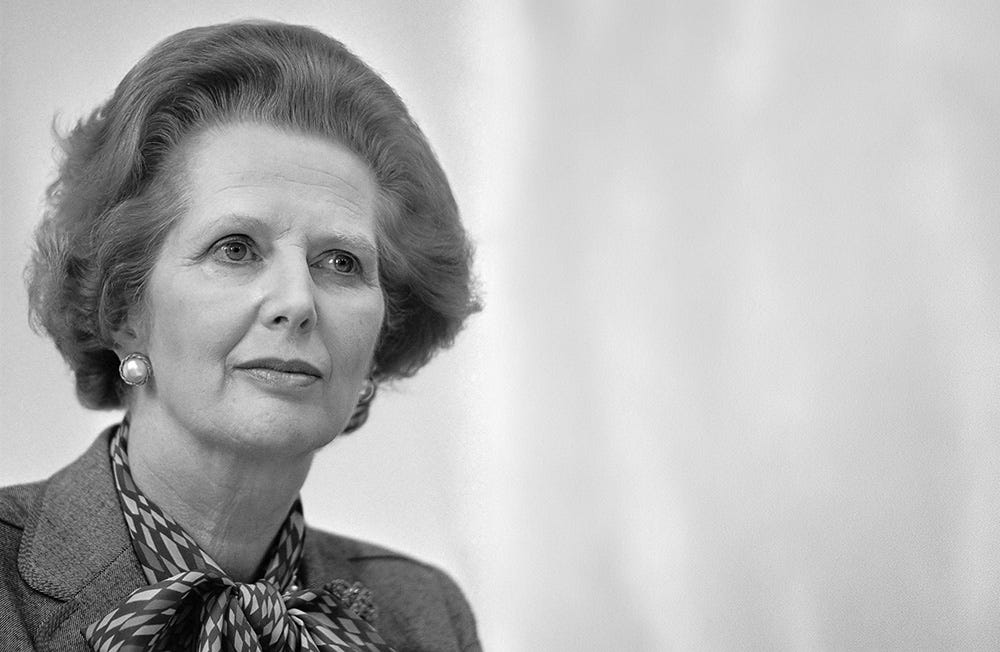
The 1983 general election provides an example of what can happen under First Past The Post, in a situation where one side of politics, in that case the right, has an undisputed candidate for Prime Minister (Margaret Thatcher) and the other side has more than one potential Prime Minister candidate or there is legitimate doubt as to which of the parties in the bloc is likely to receive the most votes. The outcome of the 1983 election was as follows.
Conservatives (Margaret Thatcher): 42.4% of votes; 397 MPs or 61% of seats
Labour (Michael Foot): 27.6% of votes; 209 MPs or 32% of seats
SDP/Liberal Alliance (Roy Jenkins/David Steel): 25.4% of votes; 23 MPs or 3.5% of seats
A Conservative landslide.
If Labour continues to claw support away from their bloc rivals and find themselves five or six points ahead of the largest party of a more equally divided right bloc, how easy will it be for Burnham to resist the temptation to call a general election?
As ever, let’s keep watching those polls.
I would prefer to see these polls broken down by country in the UK, rather than an overall view.
The bloc analysis misses the fact that Conservative supporters aren't that keen on Reform UK.
Ranked preference polling shows less than half of those ranking the Conservatives first rank Reform UK second. This means the progressive bloc got 55% of 1st preferences and 65% of 2nd preferences. The implications for electoral reform are enormous.
Any system that records ranked preferences raises progressive representation relative to a single choice system. The Alternative Vote effect is the largest as over half of voters rank Reform UK last of the 5 major parties.
It would be well worth the ERS doing regular ranked preference polling in order to guide the coming systems debate.
https://ewanhoyle.substack.com/p/the-good-systems-disagreement?r=2u1072&utm_campaign=post&utm_medium=web